- Baby & Toddler Nutrition
- Ready in 20 mins
- Aucun commentaire
The first time I gave my daughter something other than milk, I stood at the kitchen counter for a solid five minutes trying to decide what it should be.
I had read about baby rice. I had seen sweet potato everywhere on Instagram. And then I looked at my own pantry, at the bag of red lentils that has lived there for as long as I can remember, and thought, we eat this every week. Baby has been smelling it cooking since before she was born. Why would I reach for something unfamiliar when the most nutritious, most Mauritian thing I could offer her is already here?
Red Lentils was one of my baby’s first food and it turns out, there is very good nutritional reasoning for that choice.
Why red lentils is one of the best first foods you can offer
Around six months, something important shifts in your baby’s nutritional requirements. The iron baby was born with, stored in their body from your pregnancy, begins running low. And breast milk alone, however perfect it is for everything else, does not contain enough iron to meet baby’s needs at this stage.
This is why iron-rich foods are recommended as a priority when starting solids, not as an afterthought. And red lentils are one of the most accessible, most affordable, most baby-friendly iron sources available, soft enough to purée completely smooth, mild enough in flavour for a baby who has only ever tasted milk, and cooked in under 20mins with no soaking required.
One serving of this purée provides meaningful plant-based iron alongside protein, folate, zinc, and slow-releasing carbohydrates. It is nutritious and simple, the kind of first food that connects your baby to the table your family has always eaten from.
A note on iron absorption: plant-based iron (non-haem iron) is absorbed more efficiently when eaten alongside vitamin C. Serving this with a small amount of puréed tomato, or a side of puréed papaya or mango increases how much iron your baby’s body actually takes in. It does not need to be complicated, just worth knowing.

Method
- Rinse the red lentils thoroughly under cold water until the water runs clear. This removes the surface starch that can make the final purée slightly gluey if skipped.
- Place the rinsed lentils and chopped carrot into a small saucepan. Add the 300ml of water. Bring to the boil over medium heat, then reduce to a gentle simmer.
- Cook uncovered for 15 to 18 minutes, stirring occasionally, until the lentils have completely broken down and the carrot is very soft. The lentils will absorb most of the water and the mixture will thicken considerably, this is exactly what you want. Remove and set aside.
- In a saucepan, heat the olive oil and cook the chopped onions until golden brown. Add the cooked lentils and let simmer for 2 minutes before turning off the heat.
- Remove from the heat and allow to cool for a few minutes. Transfer to a blender or use a hand blender to purée until completely smooth. Add a small amount of cooled boiled water, a teaspoon at a time, until you reach the consistency you need – very smooth and thin for a first food at six months, slightly thicker as your baby progresses through the early weeks of weaning.
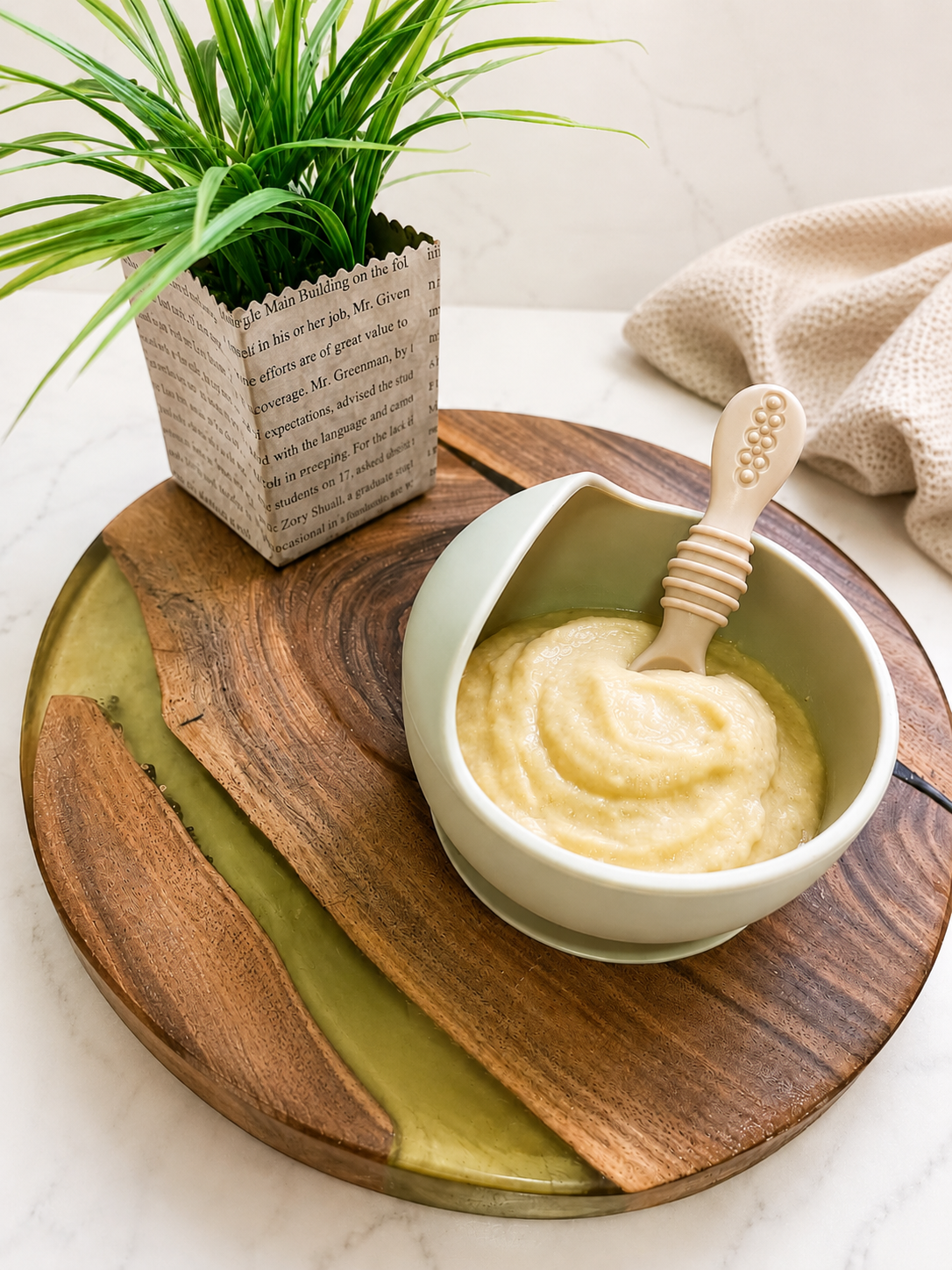
First serving:
For a baby just starting solids, offer one to two teaspoons at most. Your baby is not eating a meal yet, baby is learning what eating is. The quantity is almost irrelevant at this stage. The experience is everything.
Serve at room temperature or very slightly warm. Test the temperature on your wrist before offering. Never microwave directly, reheat gently in a small pan with a splash of water and stir well.
Watch baby’s face. The first expression is almost always one of complete bewilderment, which is not the same as rejection. Baby has never experienced texture in their mouth before. Give your baby time.
Variations as your baby grows:
At six to seven months: serve exactly as above, smooth, thin, a small amount.
At seven to eight months: leave the purée slightly thicker. Begin to blend less thoroughly so there are very fine soft pieces rather than a perfectly smooth texture. This is the beginning of texture progression.
At eight to nine months: mash rather than blend. Small, very soft pieces rather than a purée. You can begin adding a small amount of unsalted butter or a drizzle of olive oil for extra calories and healthy fat.
At ten to twelve months: serve as a soft mash alongside finger food. The dhal can now be closer to the adult consistency, just cooked until soft and slightly mashed rather than fully puréed. Begin cooking the family portion with spices and salt added after you have removed your baby’s serving.
Articles recommandés
Disclaimer: This recipe is for informational purposes only. Always consult your paediatrician before introducing solid foods if you have any concerns about your baby’s readiness, growth, or health.