I want to say something before we start.
Whatever you have been told about breastfeeding… that it comes naturally, that every Mauritius woman has always done it, that if you struggle it means something is wrong with you or your milk… I want you to set it aside for a moment.
Because here is the truth that this page is built on: breastfeeding is natural, but it is not automatic. It is a skill. One that you learn, that your baby learns, that the two of you figure out together in the exhausted, emotional, sometimes painful, sometimes extraordinarily beautiful days after birth. And like any skill worth having, it is far easier to learn when someone explains it properly rather than handing you a baby, wishing you luck, and closing the clinic door behind them.
In Mauritius, there is a commercial story about infant feeding that has been told loudly and consistently for decades. Formula companies have been present in our pharmacies, our clinics and our cultural imagination for so long that many families now assume formula is the default and breastfeeding is the exception. That a struggling mother should reach for a tin rather than for support.
Nutura exists, in part, to tell a different story.
Not because formula is evil. Not because every woman must breastfeed regardless of her circumstances or wishes. But because the women who want to breastfeed, who set out to breastfeed, deserve accurate information, genuine support, and the confidence that comes from understanding what is happening in their body and their baby’s. And right now, in Mauritius, that support is limited and somehow hard to find.
I’m pregnant and want to prepare
Prepare for the first days of breastfeeding
Breastfeeding is painful
Latch, nipple pain & feeding difficulties
I’m worried my baby isn’t getting enough milk
Milk supply, feeding & baby’s intake
I’m returning to work
Pumping, milk storage & maintaining breastfeeding
Breastfeeding and Baby Sleep
Night feeds, feeding to sleep & frequent waking
Nutrition while breastfeeding
Food, key nutrients, supplements & milk supply
The Breastfeeding Basics
WHO recommends exclusive breastfeeding for approximately the first six months, followed by nutritionally adequate complementary foods with continued breastfeeding to two years or beyond.
Breastfeeding hurts
Breastfeeding can feel unfamiliar at first, but persistent or severe pain shouldn’t simply be accepted as normal. Pain can have several causes, including positioning and attachment difficulties, nipple damage, engorgement or breast inflammation. Identifying the cause matters.
Milk Supply & Is Baby Getting Enough?
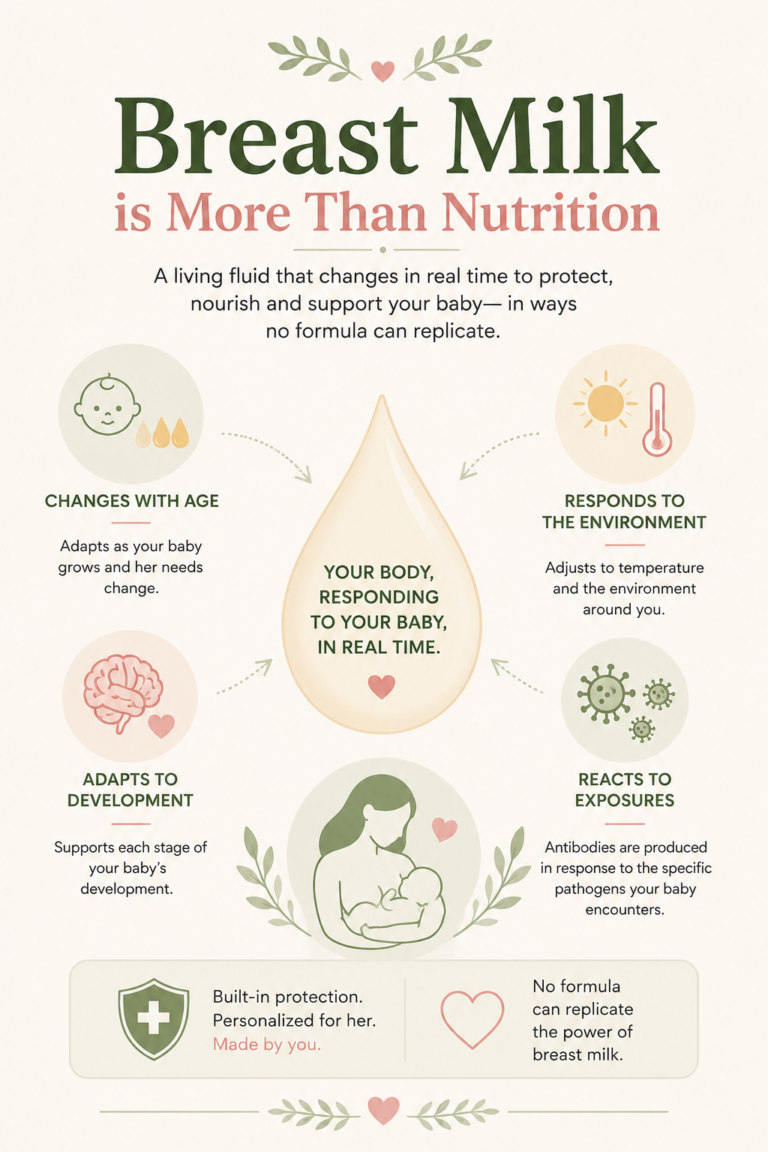
Worrying about milk supply is extremely common. Frequent feeding, cluster feeding, softer breasts or a baby suddenly wanting to feed more often do not automatically mean that your supply is low. The first step is looking at how effectively your baby is feeding and whether there are reliable signs that they are getting enough milk.
One-to-One Lactation Support
Personalised support for the questions no article can fully answer, a latch assessed in real time, a supply concern talked through with someone who knows your specific history, a plan built around your body and your baby, not a general one.
I’m Aurélie, Nutrition Coach and I’m training as a Certified Lactation Counselor, with a focus on herbal and postpartum support to follow. One-to-one lactation consultations are launching soon, join the waitlist below to be notified first and to access the introductory rate when bookings open.
Breastfeeding & Returning to Work in Mauritius
Returning to work doesn’t necessarily mean breastfeeding has to end. Planning ahead can make the transition easier, whether you want to continue breastfeeding directly when you’re together, express milk, combination feed, or gradually change your feeding routine.
Breastfeeding & Baby Sleep
Feeding and sleep are closely connected during infancy. Frequent night waking doesn’t automatically mean your baby isn’t getting enough milk, and feeding to sleep isn’t automatically a problem that needs fixing. Your baby’s age, feeding effectiveness, development and individual needs all matter.
Nutrition While Breastfeeding
Breastfeeding increases some nutritional needs, but you don’t need a perfect diet or a long list of special foods to make nutritious breast milk. Good maternal nutrition is primarily about supporting your own nutritional needs, recovery and wellbeing, while certain nutrients deserve particular attention during lactation.
The ebook coming to nutura.org
Everything above is the beginning of what you need to know. The complete breastfeeding guide — coming soon to nutura.org — goes further into every dimension of this: the day-one success plan, feeding patterns week by week, the full nutrition guide with a 7-day meal plan, supply management in depth, partner and family support (how to involve the people around you and how to set limits on the advice that undermines you), and a 7-day action plan with a printable breastfeeding checklist for the first week home.
If you want to be notified the moment it is available, subscribe to the Nutura newsletter below.
Quick answers — the questions every breastfeeding mum asks
How do I know my baby is getting enough milk?
Six or more wet nappies per day from D5. Soft yellow stools. Birth weight regained by day ten to fourteen. Steady weight gain at checks. A baby who feeds, settles, and has periods of content wakefulness. These are your indicators, not the volume in a bottle, which is the only metric bottle feeding provides and which breastfeeding does not.
When should I start pumping?
If breastfeeding is established and going well, there is no rush to introduce a pump in the first weeks. The exception: if you are separated from your baby for any reason, or if your baby cannot feed directly at the breast. If you plan to return to work at 16 weeks, begin building a small freezer stash from around week 6 to 8 with only one extra pump session daily, preferably in the morning when supply is naturally highest.
Can I breastfeed in public in Mauritius?
Legally and ethically, yes. Practically, Mauritius is a conservative culture in some spaces and you may encounter reactions that are not supportive. A good nursing cover or a loose outer layer gives you discretion if you want it. Many Mauritius mums have breastfed in shopping centres, restaurants, and family gatherings without incident. You are feeding your baby. That is never something to apologise for.
Can I mix breastfeeding and formula?
Yes, combination feeding is an option, and there are situations where it is the right choice for a family. What to understand before introducing formula: each formula feed that replaces a breastfeed reduces the signal to your supply by exactly that amount. Occasional supplementation may not affect supply significantly. Regular supplementation across multiple feeds per day will reduce supply over time. If you are considering combination feeding, discuss the timing and frequency with a lactation consultant so you can make the choice with full information about the supply implications.
What if breastfeeding is not working despite trying everything?
Some women are genuinely unable to breastfeed due to insufficient glandular tissue, previous breast surgery, certain medical conditions, or circumstances that make it impossible despite every effort. This is real, and it deserves acknowledgement rather than guilt. Formula is a safe, nutritionally adequate feeding choice when breastfeeding is genuinely not possible. Nutura’s position is not that formula is wrong. It is that formula should be a considered, informed choice, not a default reached for at the first moment of difficulty, before support has been given a chance to work.
Breastfeeding doesn’t have to look perfect to be successful.
Breastfeeding is the oldest, most tested, most nutritionally sophisticated form of infant feeding that has ever existed. It has sustained human babies for the entirety of human history, including in conditions far more difficult than a Mauritius summer.
The reason it sometimes fails in the modern context is not because it stopped working. It is because the support structures around it (the knowledgeable older women, the experienced midwives, the community of breastfeeding mothers) have been eroded, often deliberately, by commercial interests that profit from that erosion.
You can choose to breastfeed with full knowledge of what it involves, full access to support when you need it, and full permission to ask for help rather than reach for the tin.
That is what nutura.org is here for.
~ From a Mama, 15 months pp and still breastfeeding
References: World Health Organisation — Breastfeeding. who.int/nutrition/topics/exclusive_breastfeeding. UNICEF UK — Breastfeeding in the UK. unicef.org.uk/babyfriendly. Victora C.G. et al. — Breastfeeding in the 21st century: epidemiology, mechanisms, and lifelong effect. The Lancet (2016). Nambiar V.S. et al. — Moringa oleifera and lactation support: nutritional basis. LactMed — NIH database of drugs and lactation. lactmed.nlm.nih.gov. Mauritius Employment Rights Act 2008 — nursing break provisions.
Disclaimer: This page is for informational purposes only. It does not constitute medical advice.