
- Pregnancy Week by Weeks
- 10mins read
- Aucun commentaire
You are almost at the third trimester.
Not there yet, that threshold is week 28, still two weeks away but close enough that this week has a particular quality of almost. The second trimester that felt like it stretched indefinitely when you were in the first half of it is now almost behind you. The third trimester, with its different demands and different milestones and the countdown to birth that it carries, is days away from beginning.
Week 26 is worth inhabiting for a moment before that shift arrives.
Your baby this week is doing something they have not done before. Their eyes, fused since the earliest weeks of development, are beginning to open for the first time. Baby cannot see much yet, the womb is not a well-lit environment and their visual system is still developing, but they can detect light, they can respond to it, and the eyes that will be the first thing you notice when you look at their face are open for the first time inside you right now.
That is not nothing. That is, actually, everything.
Your baby at 26 weeks: over 900 grams and opening their eyes
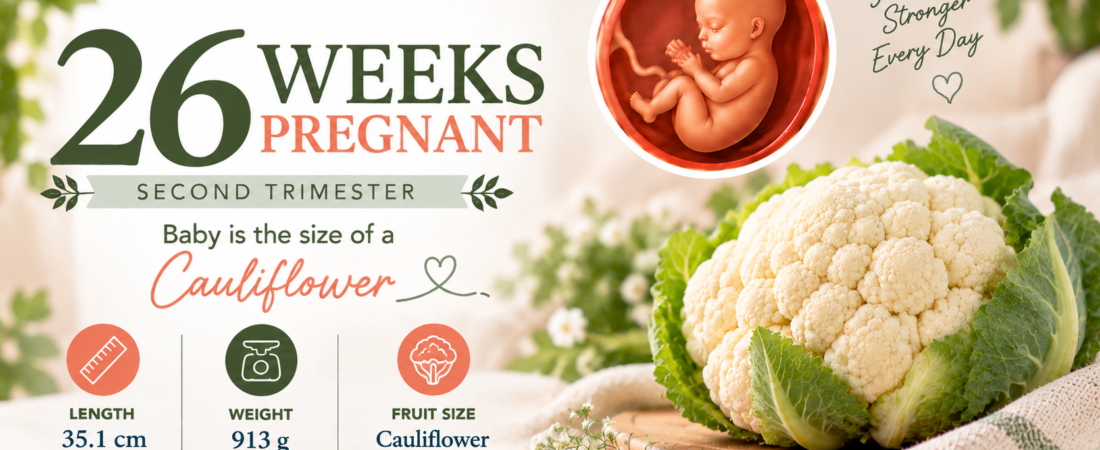
Your baby measures approximately 35.1cm from crown to heel and weighs around 913 grams this week. The weight gain that has been building since the fat accumulation of the mid-second trimester is now progressing rapidly, and you will feel the increasing solidity and strength of the kicks as evidence of it.
The eyes opening this week is the developmental milestone that most content about week 26 mentions briefly and moves past, but it represents something worth understanding. The eyelids have been fused since around week nine, protecting the developing eyes from the amniotic fluid while the complex structures of vision formed behind them. This week those eyelids begin to separate and your baby opens their eyes for the first time. The iris, the coloured part of the eye, is present but not yet fully pigmented, which is why most babies are born with eyes that appear blue or grey before the melanin that will determine their final eye colour has fully developed, a process that takes months after birth.
The visual system itself is far from complete. The retina, the photosensitive surface at the back of the eye that captures light and converts it to neural signals, is developing but not yet fully functional in the way it will be after birth. Your baby can detect the difference between light and dark, can respond to a bright light directed at your abdomen, but cannot see in the way they will be able to see once the visual cortex has matured through the months after birth. The eyes are open. The capacity to use them fully is still being built.
The brain continues its extraordinary developmental pace. This week a specific structure called the cerebellum, responsible for coordination and balance, is growing rapidly. The neural connections that will eventually allow your baby to reach for something, to walk, to coordinate complex movements are being formed in the cerebellum right now, years before they will be called upon.
The lungs continue maturing. Surfactant production is increasing week by week, and the progressive improvement in lung maturity from this point through weeks 34 to 36 is one of the clearest examples in the pregnancy of how each additional week in the womb is doing something measurable and specific.
Your baby’s response to sound is becoming more sophisticated. The startle response to a sudden loud sound is present and sharp. They can distinguish your voice from other voices and from background sounds. The music you play, the conversations happening around you, the familiar rhythms of your household are being absorbed and processed in ways that will be recognisable to them after birth.
Your body at 26 weeks
The physical experience of 26 weeks is shaped by a uterus that now sits approximately 6 centimetres above the navel and whose upward pressure is affecting the digestive system, the diaphragm, and the overall distribution of weight and posture in ways that are increasingly present in daily life.
La kicks at 26 weeks are strong and confident. Many women at this stage can see movement from the outside, a ripple or a sharp displacement of the skin that makes the pregnancy visible in a way that no scan photograph quite achieves. Partners and family members who have been placing hands on the bump in hope are now reliably rewarded. Your baby may respond to a gentle nudge by kicking back, a game that most couples at this stage have discovered and that requires no equipment beyond patience and a hand.
Heartburn and indigestion are likely worsening as the available space in the abdominal cavity contracts. The stomach is being pushed upward and the oesophageal valve, already loosened by progesterone, is under more pressure. Smaller meals more frequently, eating slowly, sitting upright after eating, and raising the head of the bed slightly for night-time heartburn are the consistent practical approaches. Ask your gynaecologist to confirm which antacid formulations are appropriate if you need more than dietary adjustment.
Shortness of breath during physical activity is common at 26 weeks as the diaphragm has progressively less room to descend with each breath. This eases somewhat when your baby drops lower into the pelvis in the final weeks of pregnancy, a process called engagement or lightening that releases the pressure on the diaphragm. Until then, slowing down when breathlessness arrives and not pushing through it is the appropriate response. Sudden severe breathlessness at rest, chest pain, or breathlessness with palpitations warrants a call to your gynaecologist rather than being attributed to the ordinary pressure of the growing uterus.
Swelling of the feet and ankles continues and may be worsening in the Mauritius heat. The combination of increased blood volume, the pressure the uterus places on the veins of the lower body, and the vasodilating effect of pregnancy hormones all contribute. Elevating the feet when sitting, avoiding prolonged standing, and staying consistently hydrated are the most practical management approaches. Sudden significant swelling that includes the face and hands, particularly with headache or visual changes, warrants same-day medical contact.
Sommeil at 26 weeks is becoming genuinely more challenging for many women. The bump is large enough that comfortable positions are limited, side sleeping with pillow support is the most appropriate position but requires physical arrangement each time you change position during the night. The frequent need to urinate, the movements of the baby who does not share your sleep schedule, heartburn that worsens lying flat, and the accumulating physical discomfort of late second-trimester pregnancy all contribute to sleep that is more fragmented than it was even a month ago. This does not resolve before birth, but it does prepare you, somewhat ungently, for what newborn nights will involve.
RELATED READ:


Nutrition at 26 weeks
The last weeks of the second trimester is a good moment to take stock of the nutritional habits that will need to carry you through the third trimester, where your baby’s growth rate is at its most rapid and the demands on your body are at their highest.
Iron is the most critical consideration. The third trimester is the period when iron deficiency anaemia is most likely to develop and most likely to affect both your wellbeing and your baby’s birth weight and iron stores at delivery. If you have not had a blood test assessing ferritin or haemoglobin in the past few weeks, ask your gynaecologist whether one is appropriate at your next appointment. Building iron status before the third trimester begins is more effective than addressing deficiency once it has developed. Continue pairing plant-based iron sources with vitamin C at every meal, and if your gynaecologist has recommended an iron supplement, take it consistently and away from tea, coffee, and dairy which all significantly reduce iron absorption.
Calcium needs are increasing as your baby’s skeleton grows at its most rapid pace in the third trimester. The calcium your baby requires comes from your diet or from your bones, without exception. Adequate dietary calcium protects your long-term bone density while meeting your baby’s developmental needs. Milk, yoghurt, cheese, calcium-set tofu, sardines with soft edible bones, and dark leafy greens are the most accessible sources in a Mauritius kitchen.
DHA, the omega-3 fatty acid most directly implicated in brain development, is incorporated into brain tissue at its most rapid rate in the third trimester. Building adequate DHA intake in the week before the third trimester begins is a meaningful nutritional investment. Oily fish from the local market, tinned sardines requiring no preparation, and mackerel are the best dietary sources.
Constipation is a feature of most pregnancies from the second trimester onward and tends to worsen as the uterus grows and places additional pressure on the digestive organs. Fibre-rich food alongside consistent hydration is the most effective dietary management. Oats at breakfast, lentils or beans at main meals, generous vegetables, and fresh fruit daily alongside adequate water prevents constipation from becoming significantly uncomfortable. If it is already significant, mention it to your gynaecologist before the third trimester rather than managing through it indefinitely.
Preparing for the third trimester
Two weeks from now you will be in the third trimester. The appointments that have been monthly through the second trimester will begin moving to every two to three weeks. The formal movement monitoring that becomes standard from around week 28 will begin. The countdown to birth, which has felt abstract through the second trimester, will start to feel concrete.
There are practical things worth doing in the next two weeks while the relative energy and comfort of the second trimester remains.
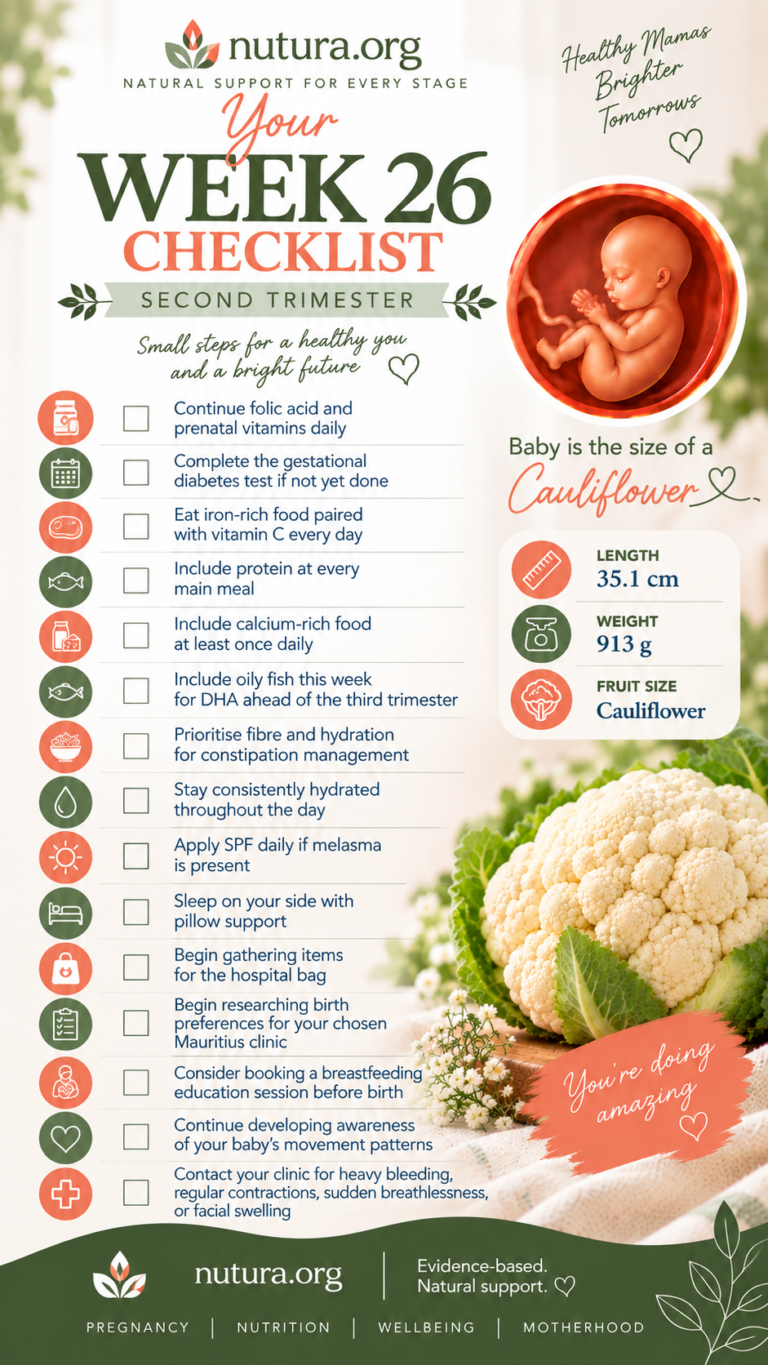
Begin researching your birth preferences if you have not already. Not because you need a complete plan, but because understanding the options available at your chosen Mauritius clinic, what the standard procedure is for the first stage of labour, what pain relief is available, and what your preferences are around intervention gives you the vocabulary to communicate with your gynaecologist about how you want your birth managed.
Begin assembling the hospital bag. Week 36 is the standard guidance for having it packed, but beginning to gather the items now, when you have the energy and the headspace for it, prevents the alternative of a rushed last-minute assembly in week 37 when physical discomfort has increased significantly.
If you have not yet begun thinking about breastfeeding preparation, this is a good window to start. A breastfeeding education session or consultation before birth is more effective than crisis support in the first 48 hours, and the consultations can be booked with the lead time that the third trimester will not easily provide.
When to contact your clinic
Contact your gynaecologist for heavy vaginal bleeding, significant or one-sided abdominal pain, regular or intensifying contractions, leaking fluid from the vagina, fever, sudden severe shortness of breath, severe headache with visual disturbances or swelling of the face and hands, a significant sustained change in your baby’s movement pattern, or any symptom that feels clearly wrong.
Next week is the final week of the second trimester. Week 28, two weeks from now, is the beginning of the third, the formal movement monitoring, and the final phase of the pregnancy. The kicks will continue strengthening. The bump will continue growing. The birth that has felt like a distant future is becoming something close enough to prepare for in earnest.
References: NHS — You and your baby at 26 weeks pregnant. nhs.uk. American College of Obstetricians and Gynecologists — Second trimester prenatal care. acog.org. World Health Organisation — Antenatal care recommendations. who.int. Tommy’s — 26 weeks pregnant. tommys.org. Ministry of Health and Wellness Mauritius — Antenatal care guidelines.
Disclaimer: This article is for informational purposes only. Always consult your gynaecologist or midwife for guidance specific to your pregnancy. If you have concerns about symptoms, movement, swelling, or your antenatal care at any stage, contact your clinic.