
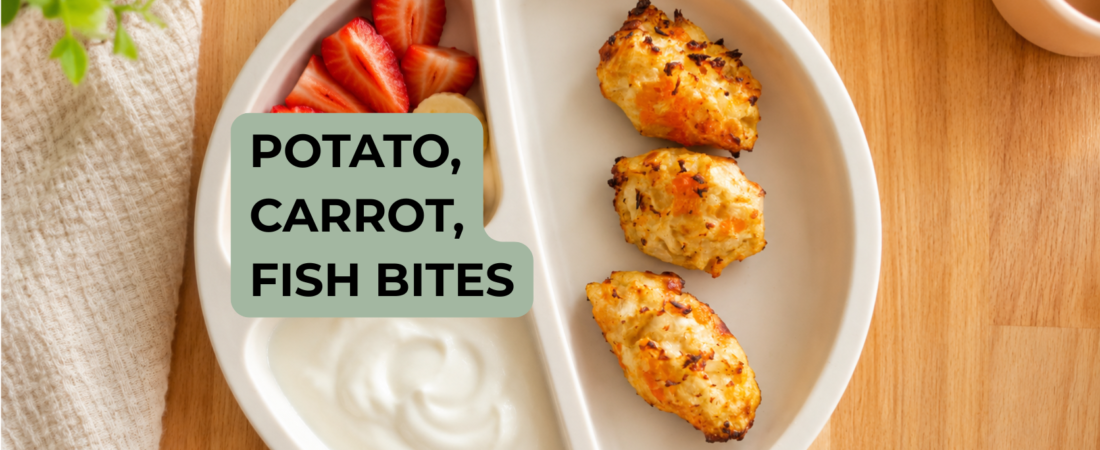
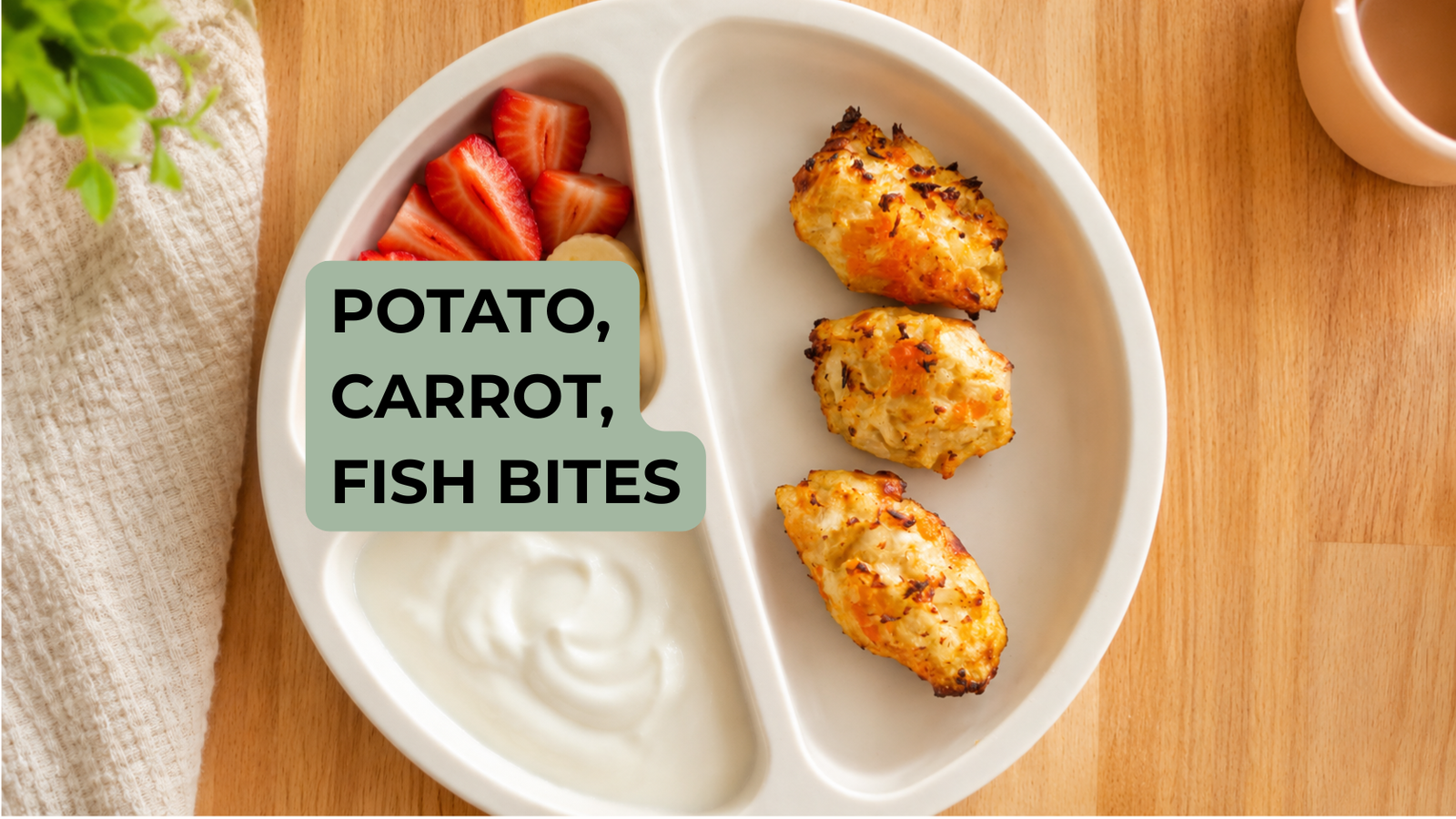
Potato, Carrot and Fish Bites for Babies and Toddlers

There comes a stage when feeding your baby starts to feel less like preparing meals and more like solving a new puzzle every day.

You want to offer fish because it provides protein and useful nutrients. You want to include vegetables. You also need the food to be soft enough, easy to hold and appealing enough that it does not immediately land on the floor.

These potato, carrot and fish bites were created for exactly that kind of day. My daughter refuses to eat fish otherwise.

They are made with four familiar ingredients: potato, carrot, fish and cheese. Everything is steamed until soft, mashed together and cooked briefly in the air fryer until the outside becomes lightly golden.

Inside, the bites remain soft and easy to squash.

They can be served for lunch, dinner or as part of a snack-style plate with plain yoghurt, avocado, vegetables or fruit. They are also useful for parents who want to introduce fish in a form that feels less overwhelming than placing a whole piece of fillet on the plate.

Your toddler may take one bite and ask for more yoghurt.

Another day, the same child may refuse them completely.

That does not make the recipe a failure. Learning to eat is gradual, and repeated exposure can be more important than how much is eaten on one particular day.

Your baby may eat three.

Why turn fish into soft finger-food bites?

Fish can be served to babies in many ways. It can be flaked into purée, mixed into rice, added to pasta or offered in soft pieces.

These bites provide another option.

The potato creates a soft base and helps the mixture hold together. The carrot adds gentle sweetness and colour, while the fish provides protein. A small amount of cheese adds flavour and helps bind the ingredients.

The recipe contains no added salt because cheese already contains some sodium.

This is not intended to be the only way your baby experiences fish. Offering foods in different forms can help children become familiar with their taste, smell and texture over time.

Potato, Carrot and Fish Bites for Babies and Toddlers

Soft on the inside and lightly golden outside, these potato, carrot and fish bites are an easy way to serve fish and vegetables in a toddler-friendly finger food.
Prep Time 15 minutes
Cook Time 7 minutes
Total Time 22 minutes
Servings: 10 BITES
Course: Snack
Cuisine: Healthy Bites, Toddler

Ingredients
  

  • 2 medium Potatoes, peeled and chopped
  • 1 medium Carrot, peeled and chopped
  • 100 g Boneless Fish
  • ¼ cup Cheese, finely grated
  • Unsalted Butter or Olive Oil

Method
 

  1. Peel the potatoes and carrot, then cut them into small pieces so they cook evenly.
  2. Steam the potatoes, carrot and fish until everything is completely cooked and soft. The fish should be opaque throughout and flake easily.
  3. Transfer the potatoes and carrot to a plate and mash them until mostly smooth.
  4. Flake the cooked fish carefully with your fingers, checking again for any remaining bones.
  5. Add the fish to the mashed vegetables and combine thoroughly.
  6. Stir in the grated cheese while the mixture is still slightly warm. Allow the mixture to cool enough to handle.
  7. Take small portions and shape them into short oval bites or gently flattened patties. Keep them soft rather than pressing them too firmly.
  8. Preheat the air fryer to 180°C if required by your model.
  9. Lightly grease the basket or place the bites on suitable air-fryer baking paper.
  10. Air-fry at 180°C for approximately 5 minutes, turning carefully halfway if needed.
  11. Cook for another one or two minutes when necessary, until the outside is lightly golden and the bites hold their shape.
  12. Allow them to cool before serving. Check the centre carefully because it may remain hot even when the outside feels cooler.

Notes

Use a mild fish such as salmon, hake, cod or another suitable low-bone fish. Check the cooked fish very carefully and remove every bone before mixing.

What should the texture feel like?

The bites should be lightly firm outside but soft enough to squash easily between your thumb and finger.

They should not become hard, dry or crunchy.

For younger babies, make the mixture smoother and shape it into longer, wider pieces that are easy to grasp.

For toddlers, you can make smaller oval bites or gently flattened patties.

Children develop chewing and swallowing skills at different rates, so the shape that works for one child may not be suitable for another.

What if the mixture is too wet?

The moisture level will depend on the type of potato, the carrot and the amount of water retained during steaming.

When the mixture feels too soft to shape, place it in the refrigerator for approximately 15 minutes.

This often helps it firm up naturally.

You can also add one teaspoon of finely ground oats at a time until the mixture becomes easier to handle.

Avoid adding too much, as the bites can become dry.

What if the mixture is too dry?

Add one or two teaspoons of plain yoghurt or water.

For younger babies, you may also use a little breast milk or correctly prepared infant formula just before shaping the bites.

Add only a small amount at a time.

The mixture needs to remain soft without becoming sticky or difficult to hold together.

What kind of fish can I use?

A mild, soft fish usually works best.

You may use salmon, hake, cod or another fish your child has already eaten safely.

When choosing fish for babies and toddlers, consider the species, mercury level, freshness and whether it contains small bones.

Salmon brings a stronger flavour and a slightly richer texture. White fish such as hake or cod usually creates milder bites.

Avoid raw, smoked or undercooked fish in this recipe. The fish must be fully cooked before it is mixed with the vegetables.

Can I use canned fish?

Canned salmon or sardines can work, provided they are suitable for your child and checked extremely carefully for bones.

Soft sardine or salmon bones may be edible for adults, but the texture may not be appropriate for every baby.

Canned fish can also contain more sodium than fresh fish, so check the label and drain it well.

For the simplest version of this recipe, a freshly steamed boneless fillet is easier to control.

What cheese should I use?

Choose a pasteurised cheese with a mild flavour.

Mild cheddar, mozzarella or another cheese that melts easily can work well.

There is no need to add salt because cheese already contributes flavour and sodium.

When your child has not yet tried dairy, introduce it separately before combining it with fish in this recipe.

Serving ideas

These bites can be served with a spoonful of plain yoghurt as a dip.

Mashed avocado also works well and adds a creamy texture without overwhelming the flavour of the fish.

For lunch or dinner, serve them with soft broccoli, peas, pumpkin, courgette or another cooked vegetable your child enjoys.

You can also add a small portion of rice, couscous or soft bread for a more substantial meal.

For a colourful toddler plate, pair the bites with plain yoghurt and soft fruit such as ripe banana, mango, pear or appropriately prepared strawberries.

The plate does not need to contain several different foods every time. One or two familiar sides may make the meal feel more manageable for both you and your child.

Are these suitable for baby-led weaning?

They may be suitable for babies who are developmentally ready for finger foods and can sit upright, reach for food and bring it to their mouth independently.

The texture should remain very soft.

Shape the mixture into pieces that are easy for your baby to hold, and supervise closely throughout the meal.

Baby-led weaning does not remove choking risk. Safe positioning, appropriate food preparation and continuous supervision remain important.

When you are unsure whether your baby is ready for this texture, discuss feeding progression with your paediatrician or another qualified professional.

Can I cook them in a pan?

You can cook them in a lightly greased non-stick pan over low heat.

Flatten them slightly and cook gently on both sides until they are lightly golden and heated through.

Handle them carefully, as the soft mixture can break when turned.

Allergy reminder

Fish and dairy are common allergens.

It is better for your baby to try fish and dairy separately before eating a recipe that contains both.

When introducing a new allergen, offer a small amount earlier in the day when possible, rather than for the first time during a busy evening meal.

Once an allergenic food has been introduced and tolerated, it can continue to be included regularly as part of the child’s usual diet.

Children with eczema, a diagnosed food allergy or a previous reaction may need individual advice before introduction.

Disclaimer: This recipe is provided for general educational and informational purposes. Babies and toddlers develop chewing, swallowing and feeding skills at different rates. Adapt the size, shape and texture of the bites to your child’s current abilities and supervise them closely throughout the meal. Use fully cooked fish and inspect it carefully for bones. Seek advice from your paediatrician or a qualified child-nutrition professional when your child has food allergies, swallowing difficulties, feeding concerns, poor growth or specific medical or nutritional needs.